7th World Media Summit News

Updated Daily During Summit Dates: November 5th to November 9th, 2026
Featuring news updates, articles and video presentations of this exciting event.

Sarwar Kashmeri Speaks at the 7th World Media Summit

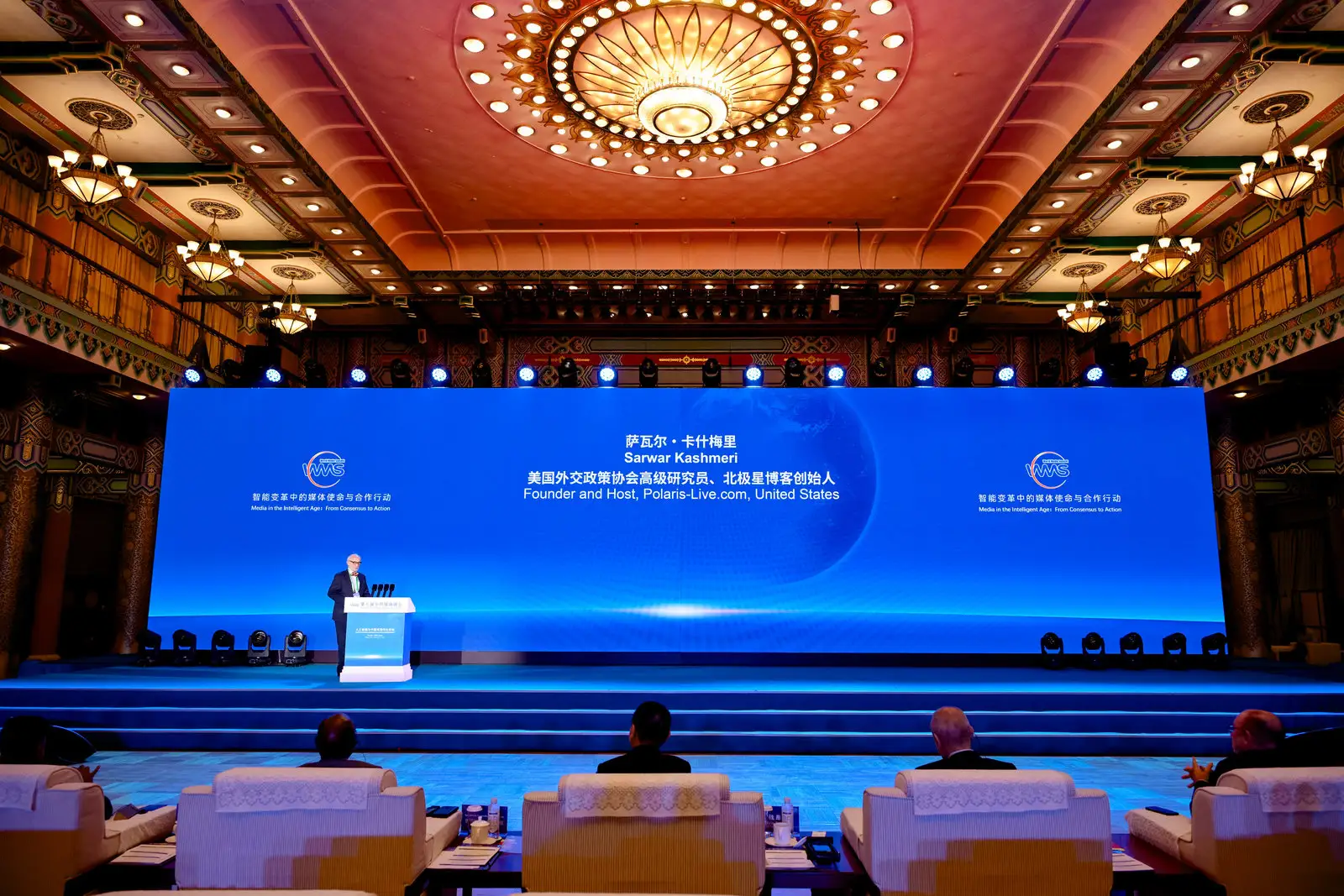
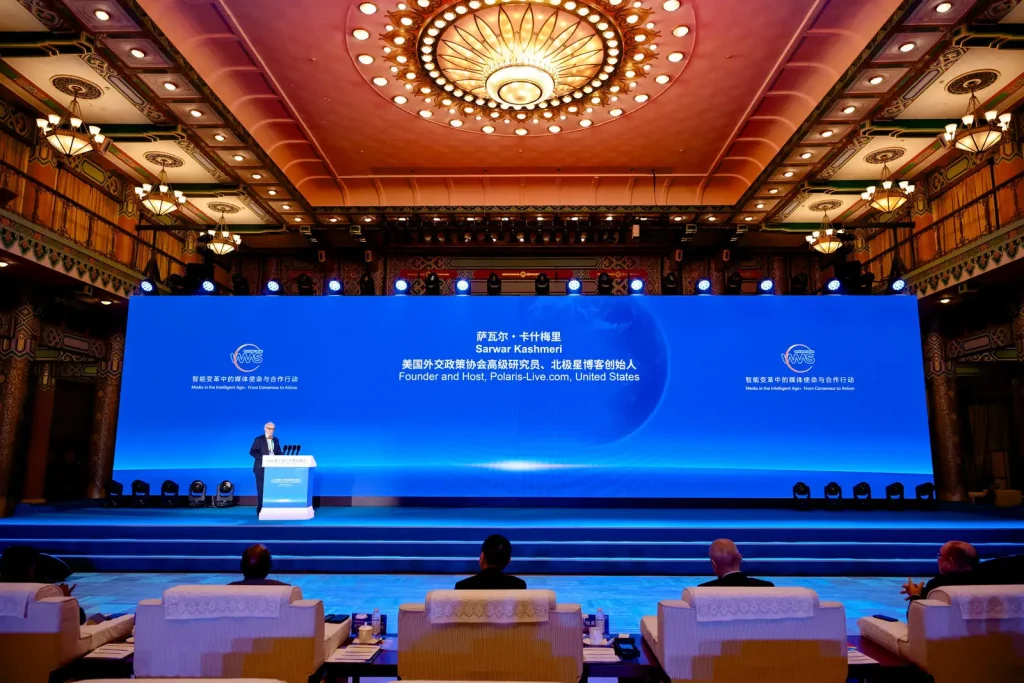
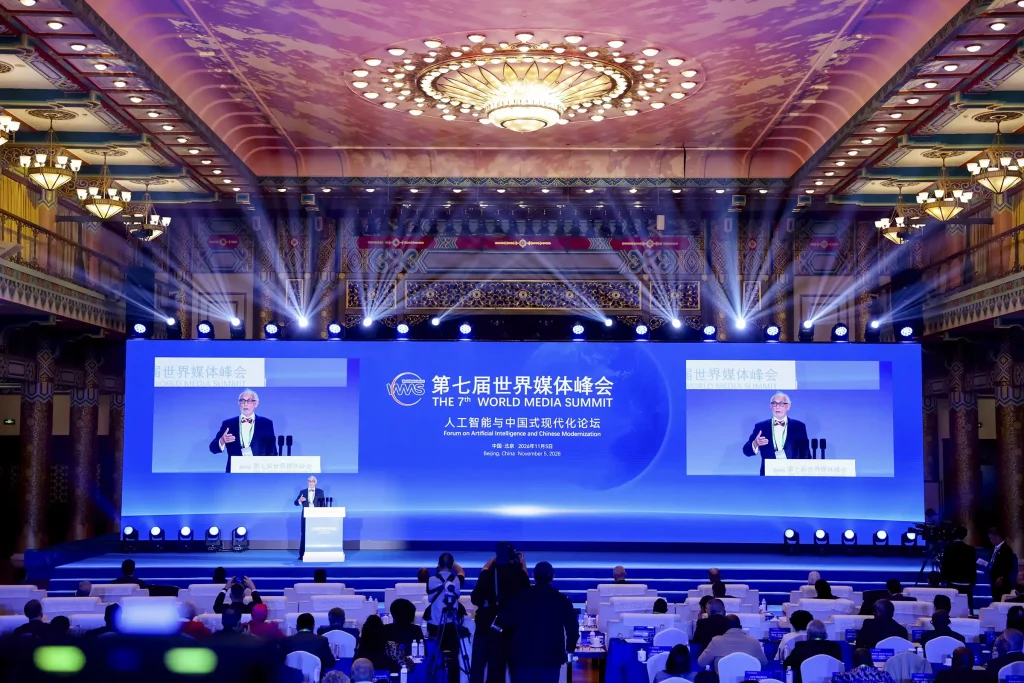
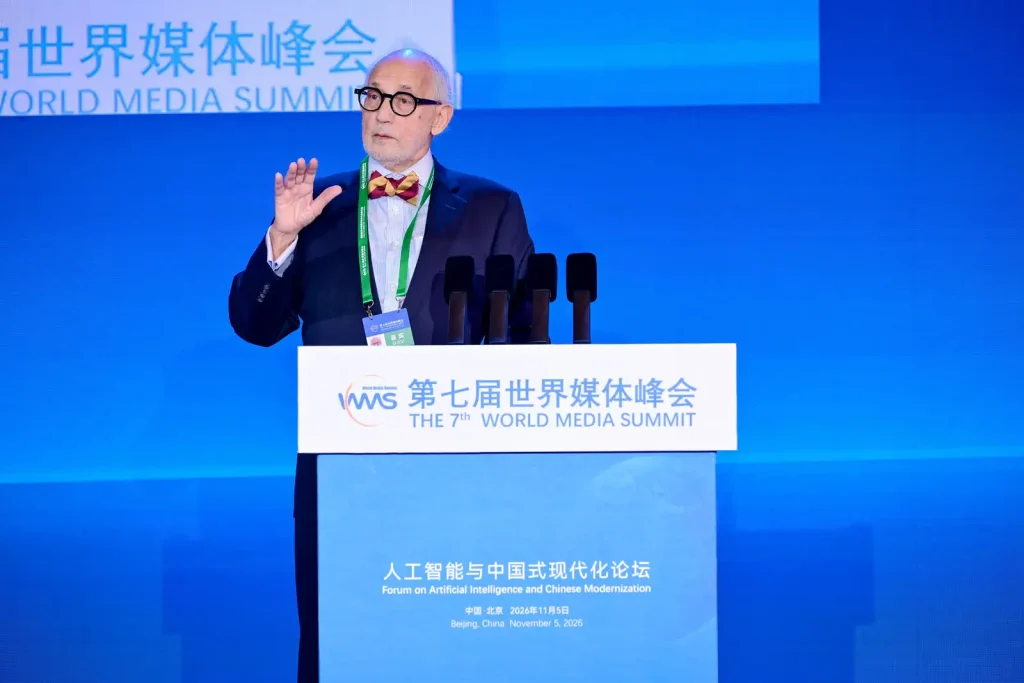
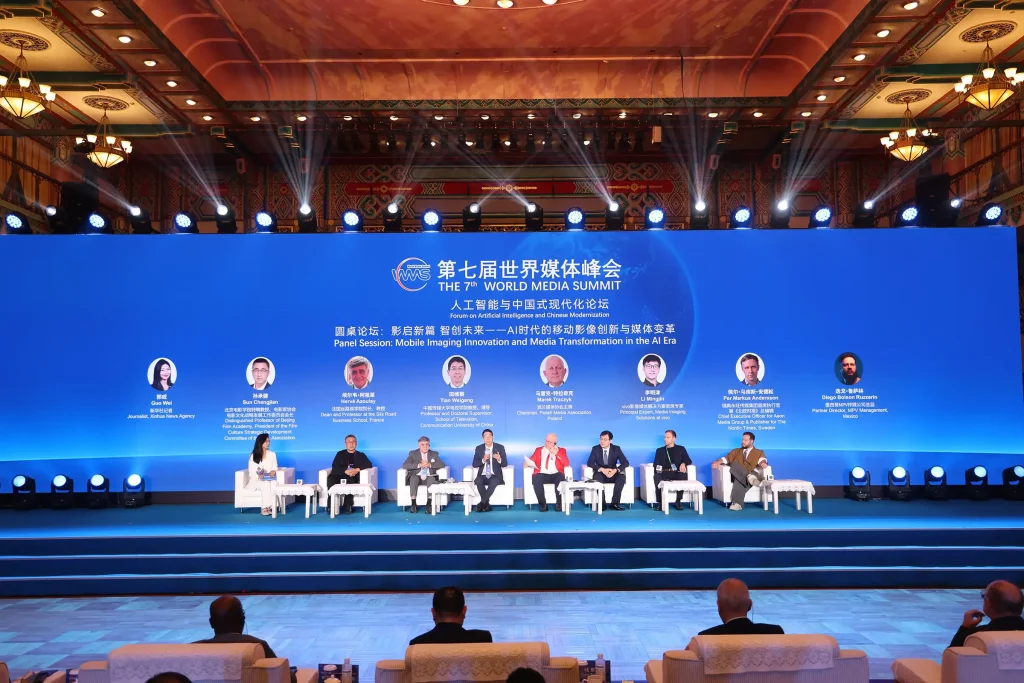
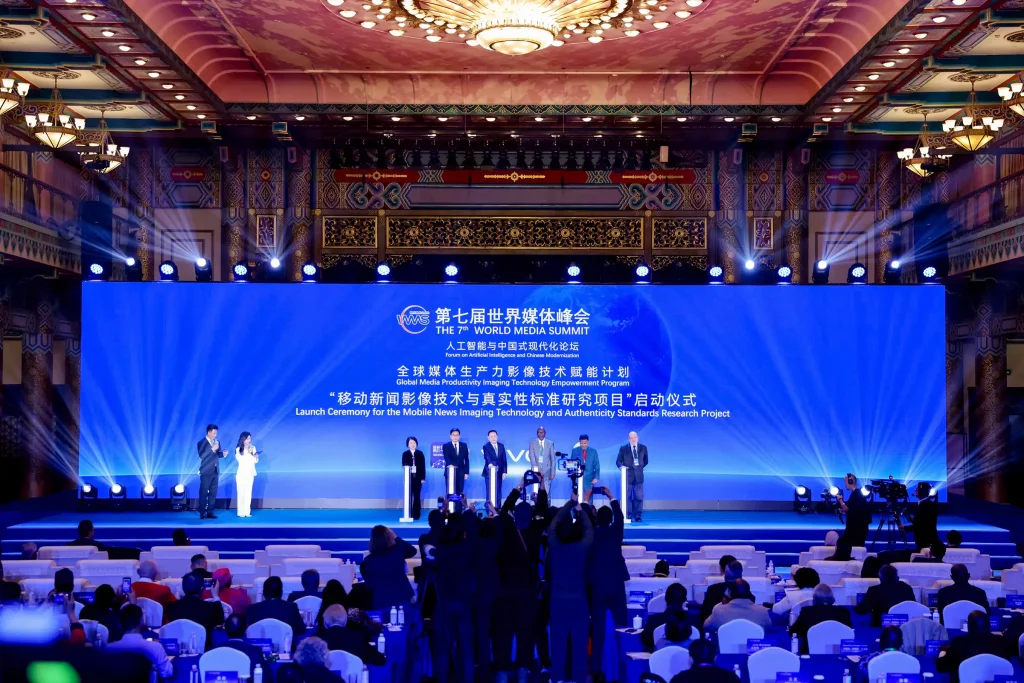
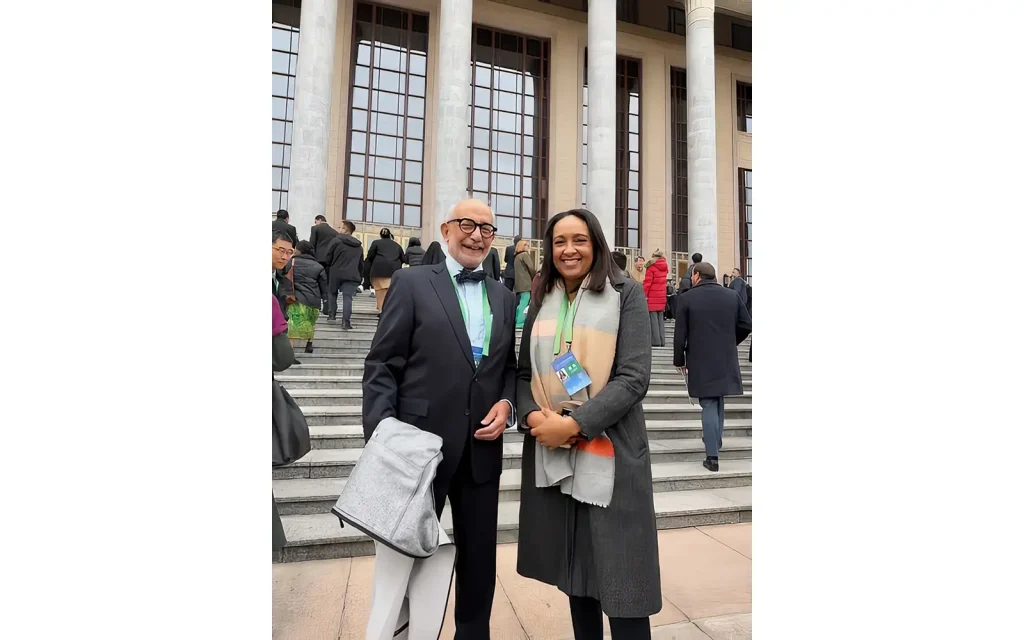
Sarwar Kasmeri was honored to speak at the 7th WMS, Beijing Nov 5th, 2026 & join high-level exchanges on cutting-edge media/AI topics with global media, thinktanks, governments, businesses and international organizations with high recognition for POLARIS-LIVE. Over 450 participants from 103+ countries attended.

Sarwar Kashmeri, founder and host of Polaris-Live.com, speaks during the 7th World Media Summit opening day in Beijing. Kashmeri warned that AI's growing capacity to generate convincing fake news and fabricated images could damage public trust and international relations. To combat the fraud, he proposed that the United States and China take the lead in establishing an international working group of global AI experts under the auspices of the United Nations.

AI+ and Global Communication: Who Will Shape the World’s Conversation

The following is a speech delivered by Polaris-Live Founder, Sarwar Kashmeri, at the WMS,

Good morning, zao shang hao!

My name is Sarwar Kashmeri, founder and host of an online channel called Polaris-Live.com: United States and China in the World.
Polaris-Live is a program of live conversations with global experts on perhaps the most consequential relationship of our time—that between China and America. Polaris, is the name of the North Star, that has for generations guided sailors to safe havens and serves as our inspiration.

This is Polaris-Live’s fifth year. It has aired over 150 programs highlighting American, Chinese, global south, and other international perspectives. We are independent and commercial free; totally user supported.

The United States and China are today locked in fierce economic, technology, and geopolitical competition. But let me remind you of a serious incident.

While the two superpowers with the largest economies in the world, were busy competing with each other: a country with a far smaller economy pulled off a digital-currency theft.

This should be a clear wake-up call to both the United States and China that while they may lead in today’s technologies they alone cannot control their use by criminal gangs, terrorists, and cyberattacks from autonomous AI systems. This will require an international initiative in which countries from the global south, Latin America, Asia; large and small countries all have a role to play.

Commendably, at their meeting in Beijing earlier this year, Presidents Xi Jinping and Donald Trump agreed to start joint efforts to deal with these dangers. But in view of recent developments, these efforts need to be pushed into overdrive, a difficult undertaking given the complex issues of security and control that are being discussed. And that’s where I believe this World Media Summit and the media leaders here today can play a leadership role. Let me explain.

What I’d like to propose for your consideration is a plan to counter what I see as one of the main roadblocks to the success of Media in the Intelligent age: AI-Generated Misinformation. That is, AI’s growing capacity to generate convincing false news, false images, and other information that can damage public trust and international relations.

Professor Zha Daojiong of Peking University, one of Polaris-Live’s frequent guests, told me a few days ago that “this problem deserves serious attention, and will require international engagement, responsible innovation, and practical cooperation across societies.”

It is an issue that is tailor-made to be addressed by a working group of global AI experts. It is also a task that is amenable to technical solutions, as opposed to the far more difficult issues of security, control, and governance.

Such a group could be set up under the auspices of the United Nations, an organization that has wide experience in managing global solutions from creating a standard airline ticket to crafting the United Nations Convention on the Law of the Sea.

Success in setting up such a group and its results could open further lines of communication between the two superpowers on the more contentious issues that continue to hamper the initiatives that the Presidents of China and the United States began in Beijing. That could well be one of the lasting legacies of this year’s World Media Summit.

I’d love to discuss your reactions to my idea in person as we mingle over the next few days.

In closing, allow me to thank Xinhua and the People’s Republic of China for taking the initiative to convene this timely and important Summit. And for allowing me to say a few words to this esteemed audience.

I am so looking forward to the next three days. Thank you.
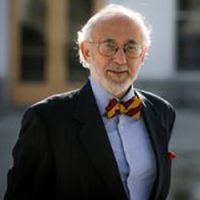
Sarwar Kashmeri at the 7th World Media Summit Video

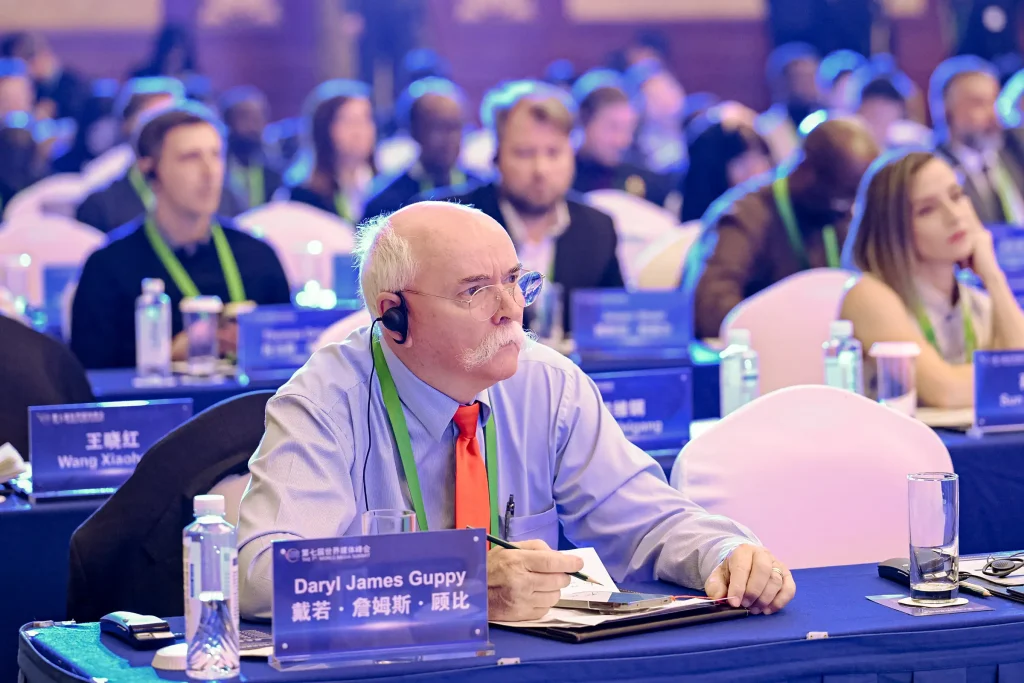
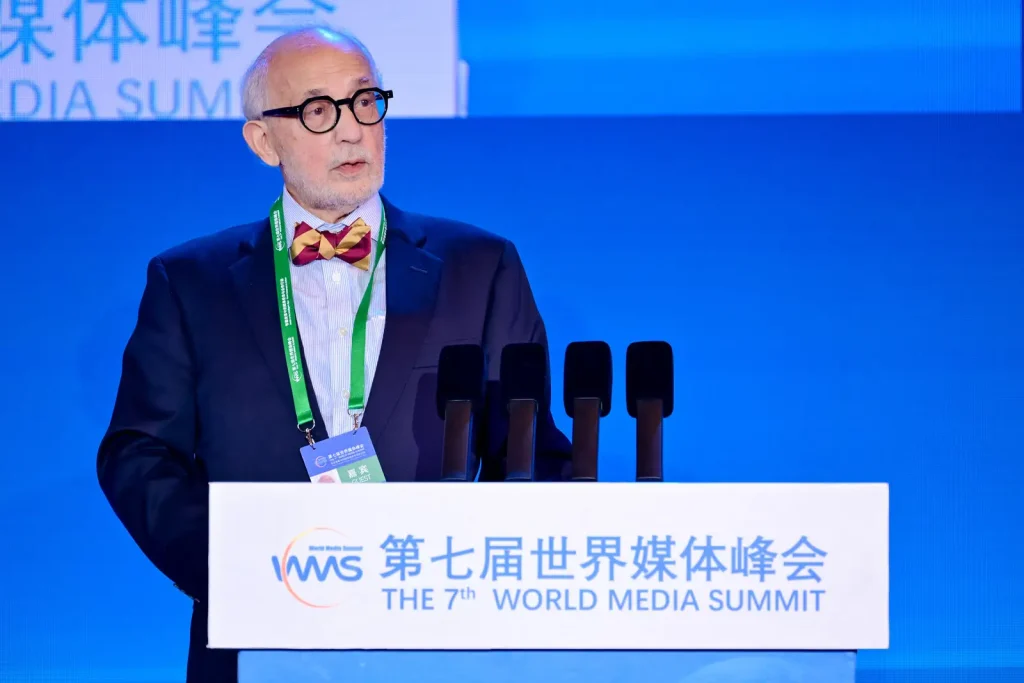
7th World Media Summit In Pictures

The Seventh World Media Summit Beijing Consensus

Beijing, China • Nov. 7, 2026

We, representatives of media outlets, think tanks, government agencies, and international and regional organizations from around the world, convened in Beijing, China, for the Seventh World Media Summit from Nov. 5 to 9, 2026.

We recognize that artificial intelligence (AI) is driving a new round of technological revolution and industrial transformation, profoundly reshaping the way people live and work, as well as the landscape of global development. We stand ready to leverage the unique strengths of the media, build consensus among all parties, and work together to turn cooperation into tangible results, advancing the transformation and development of global media in the AI era.

AI is increasingly becoming a core driving force behind media transformation, and promoting inclusive access to technology is a common aspiration of media organizations around the globe. We are committed to advancing the inclusive and responsible application of AI in the media sector, ensuring that technological achievements benefit media organizations in all countries, regardless of their stage of development.

We believe that the media serves as an important bond for enhancing mutual trust and bridging differences. We advocate upholding an objective and impartial stance, countering disinformation and misinformation, and creating channels for rational dialogue to address global challenges.

In recent years, under the framework of the World Media Summit, a series of global, regional and specialized conferences have been held, including the Global South Media and Think Tank Forum, the Shanghai Cooperation Organization Media and Think Tank Summit, and the forum on the development of people-to-people and cultural exchanges between China and France. Various forms of exchanges have been carried out, including joint interviews and bilateral visits. Thanks to the joint efforts of all parties, the World Media Summit has become an important platform for deepening cooperation and mutual learning among media organizations worldwide.

We express our appreciation to Xinhua News Agency and the People’s Government of Beijing Municipality for hosting the Seventh World Media Summit. We look forward to continuing our cooperation and working together to open a new chapter in media development in the AI era.

Scroll to Top